
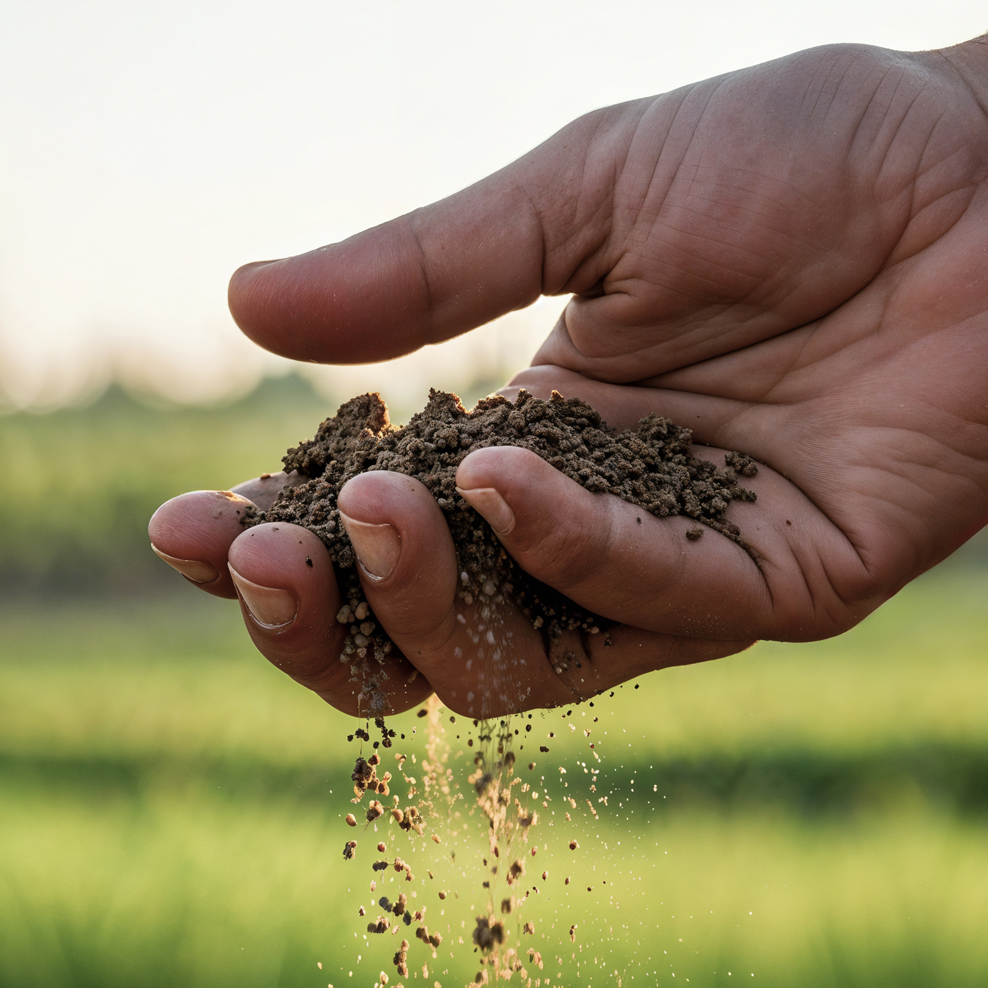
Sustainability that starts in the soil
Sustainability is increasingly central to how food companies evaluate ingredients. Carbon footprint, water use, soil health, and supply-chain transparency are now part of the same conversation as nutrition and price.
Pulse flour sits favourably in that conversation. Pulses, the dry edible seeds of legumes such as lentils, chickpeas, and fava beans, are widely cited by industry, government, and academic sources as one of the more sustainable plant-protein crops. Simpson Seeds Inc. (SSI) mills four pulse flours in Moose Jaw, Saskatchewan: red lentil flour, yellow lentil flour, chickpea flour, and fava bean flour, sourced primarily from Saskatchewan farms.
Pulses have become an important ingredient for food manufacturers looking to improve sustainability without compromising performance. From reducing fertilizer use to supporting soil health and shorter regional supply chains, pulse flour offers several environmental advantages worth considering.
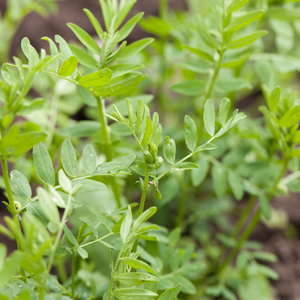
Pulses fix their own nitrogen, reducing fertilizer demand
Most field crops depend on synthetic nitrogen fertilizer, the production and application of which is a significant contributor to agricultural greenhouse-gas emissions (Pulse Canada, Sustainability hub).
Pulses are different. Through a symbiotic relationship with rhizobia bacteria in root nodules, pulses convert atmospheric nitrogen into a form the plant can use — a process called biological nitrogen fixation. Because of this, pulses require little to no nitrogen fertilizer to grow (Pulse Canada; FAO World Pulses Day, 2023).
Including pulses in a rotation also reduces fertilizer requirements for the crops that follow. One peer-reviewed Western Canadian study estimated that including dry peas and lentils in rotation with wheat contributed approximately 1.3 million tonnes of carbon-emission savings annually — around 2% of the entire carbon footprint of Canadian agriculture (MacWilliam et al., 2018, Agricultural Systems).

A naturally low water footprint
Pulses are widely cited for their low water requirements. Pulse Canada describes pulses as “a protein source with a very low water footprint,” and the FAO notes that pulses are drought-tolerant and well-suited to semi-arid growing regions — including the Canadian prairies (Pulse Canada; FAO, 2023).
Pulses also use water in a way that benefits the next crop in the rotation. Their root systems draw moisture from shallower soil layers, leaving deeper soil moisture available for following cereal or oilseed crops (Pulse Canada; Pulses.org, 2021).
The exact water footprint of any flour will depend on the field, the year, and the milling system, so SSI does not publish a single per-tonne number. Customers seeking specific Life Cycle Assessment (LCA) figures should consult Pulse Canada’s Canadian pulse LCAs, which were built using data from approximately 600 Canadian pulse growers (Pulse Canada, Sustainability hub).
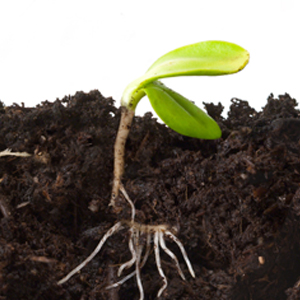
Soil-health and crop-rotation benefits
The Government of Saskatchewan’s agronomy guidance identifies legumes, including pulses, as a key tool for improving soil nitrogen and reducing fertilizer dependence in following crops (Government of Saskatchewan, Soil Improvements With Legumes).
Pulses contribute to soil health in several ways: they feed soil microbes through root exudates, support diverse microbial populations that cycle nutrients more efficiently, and help crowd out some soil-borne pathogens (Pulse Canada).
These benefits carry forward. Pulse Canada reports that wheat and barley grown after pulses generally produce higher yields and higher protein than the same crops grown after cereals alone. FAO notes that, in some agronomic systems, cereals grown after pulses can yield up to 1.5 tonnes more per hectare than the same cereals in monoculture (FAO, 2023). Local agronomy and weather vary, so the exact uplift will differ from farm to farm.
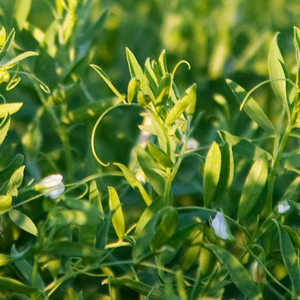
A lower carbon footprint at the ingredient level
Pulse Canada describes Canadian peas and lentils as “effectively carbon neutral or negative” based on Life Cycle Assessment work undertaken in partnership with growers (Pulse Canada, Sustainability hub; Canadian Roundtable for Sustainable Crops).
Two factors drive this. First, pulses themselves require very little synthetic nitrogen, so the upstream emissions from fertilizer manufacture are minimal. Second, on the prairies, widespread adoption of no-till farming and reduced fallowing helps sequester atmospheric carbon in agricultural soils, partially or fully offsetting the emissions of producing the crop (Pulse Canada, Canadian Pulse Industry).
Substituting pulse flour for ingredients with higher per-tonne emissions — for example, when used to replace a portion of conventional wheat flour in a baked good — can reduce the overall carbon footprint of the finished product. Pulse Canada’s published research supports this directional finding in cereal-based applications (Pulse Canada). Actual savings will depend on the formulation and the reference ingredient being replaced.

What this means for SSI customers
Sustainability claims on a finished food product need substantiation. For SSI customers building plant-forward or lower-footprint product lines, pulse flour offers a credible, well-documented ingredient story:
- An ingredient class with peer-reviewed and government-cited sustainability benefits — nitrogen fixation, low water use, soil-health contribution, and carbon savings in rotation.
- A short, regional supply chain — Saskatchewan farms feeding a Moose Jaw mill.
- Documentation that supports certification and audit requirements: FSSC 22000, Kosher, Halal, FDA registration, allergen controls, and traceability via TraceGains Gather.
- A four-flour product line — red lentil, yellow lentil, Kabuli chickpea, and fava bean — that can be evaluated for the application without committing to a single pulse type.
SSI does not publish per-tonne water, energy, or carbon figures at this time. Customers who require facility-level data for a specific Life Cycle Assessment should contact the SSI team directly to discuss what can be shared. For ingredient-class LCA data, Pulse Canada is the recommended primary source.
at a glance
Sustainability attributes of pulse flour
Attribute summaries below are drawn from the cited sources. They describe pulses as a crop and ingredient class, not SSI-specific operations.
| Sustainability attribute | What the research says | Primary source |
|---|---|---|
| Nitrogen fertilizer demand | Pulses fix atmospheric nitrogen biologically and require little to no synthetic nitrogen fertilizer. | Pulse Canada; FAO 2023 |
| Carbon footprint (crop level) | Canadian peas and lentils described as effectively carbon-neutral or carbon-negative based on LCA work. | Pulse Canada; Canadian Roundtable for Sustainable Crops |
| Carbon footprint (rotation level) | Including pulses in rotation with wheat contributed ~1.3 MT of CO₂-equivalent savings annually in Western Canada (~2% of Canadian ag). | MacWilliam et al., 2018 |
| Water requirements | Drought-tolerant; described as having a very low water footprint relative to other protein sources. | Pulse Canada; FAO 2023 |
| Soil health | Improve soil nitrogen for following crops, support microbial diversity, and aid nutrient cycling. | Govt. of Saskatchewan; Pulse Canada |
| Following-crop yield | Cereals grown after pulses can yield meaningfully more than cereals grown after cereals; exact uplift varies by site and year. | FAO 2023; Pulse Canada |
| Saskatchewan supply share | Saskatchewan accounts for ~79% of Canada’s pulse-growing area. | Canada Action (citing Statistics Canada) |
| SSI Certifications | FSSC 22000, Kosher, Halal, FDA Registered, Allergen Control, 3rd-Party Audit. | Simpson Seeds Inc. |
Frequently Asked Questions
Passionate – Dedicated – Professional
Ready to Source Canadian Pulse Flour or Start a Contract Milling Project?
The Simpson Seeds pulse flour mill is built for food manufacturers and ingredient brands who want traceable, Saskatchewan-grown pulse flour — milled, packaged, and shipped without leaving Canadian soil.
Call us for inquiry : Monday to Friday : 8 am – 4 pm
+1 (306) 693 2132